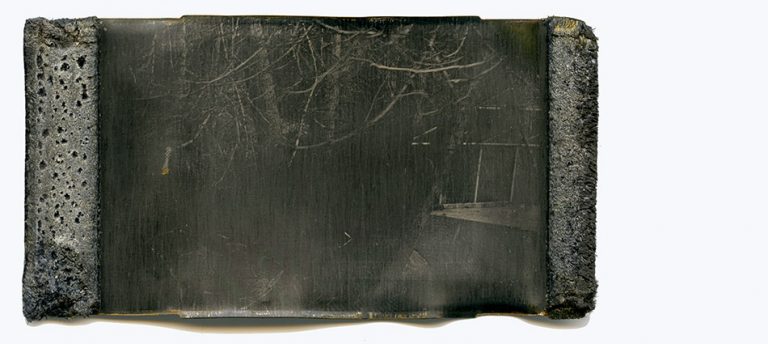
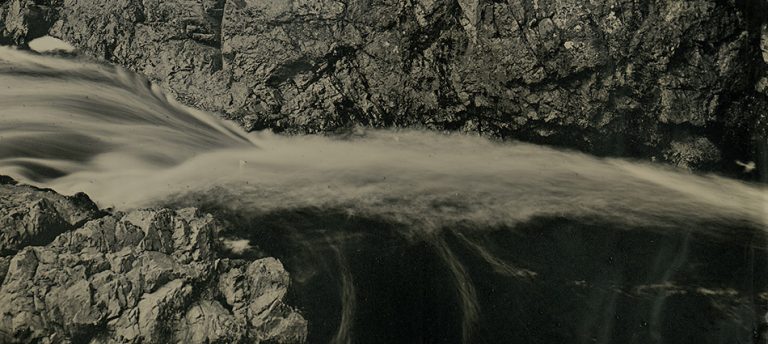
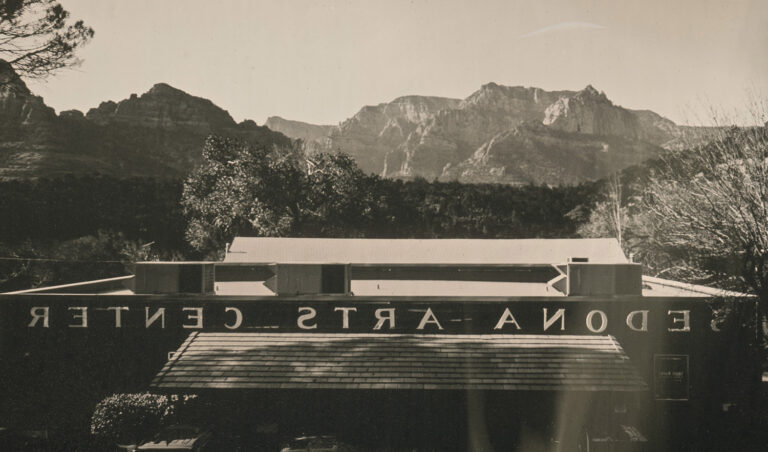
I recently joined the Artists’ Coalition of Flagstaff, a group of local artists doing the usual things: they have a gallery in town, there are workshops, studio tours, etc. This week they are holding a Plein Air Photography Festival and I decided to use it as a prompt to see if I can remember how to use a camera and if I still liked making photographs – it has been a while since I felt like making new work. Short version: yup, I still enjoy photography!
For me part of what made this event fun and interesting is that we had several constraints to the photography: we were required to make our photographs between 5:00am October 3rd and midnight October 5th, and we were required to photograph basically within Coconino county (plus Navajo Nation and “the greater Sedona area”). While being limited to one county might sound confining to folks back east, Coconino county is massive. According to Wikipedia it is the second largest county in the lower 48 states, and is by itself larger than the 9 smallest states. Plenty of room to photograph without tripping over each other.
I thought the original rules also stated that we could submit only two photos, one each in the black and white category and one color. I’m not sure if I misread or if they changed the rules to simply two photos total in either or both categories, but I am glad I thought I could enter a color photo, since I used that as an opportunity to “play” more with my work. More on that in a bit.
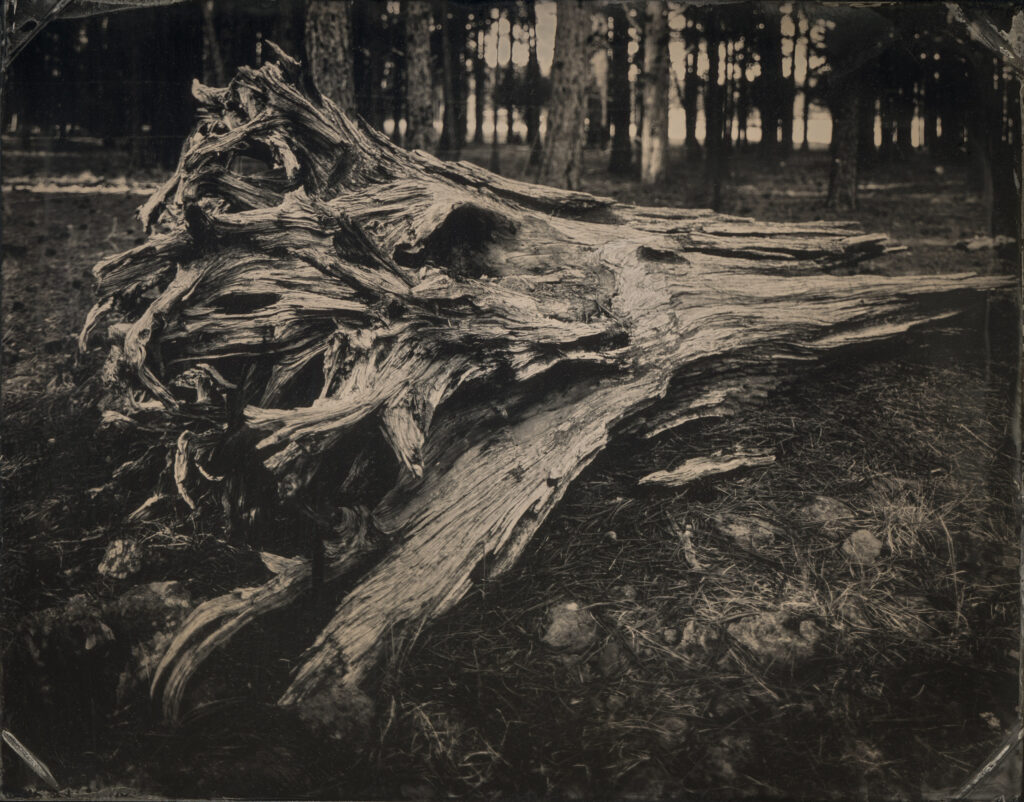
For the black and white photos I made tintypes in the more serious mode that I try to do for this body of work. I had scouted several locations and concepts in advance, but in the end I spent more time working on two compositions rather than hurrying through many different ideas. One of my favorite photos I’ve made in months was of a fallen tree just a few hundred yards from my house. I spent all afternoon and evening in the quiet of the National Forest working with this tree.
間
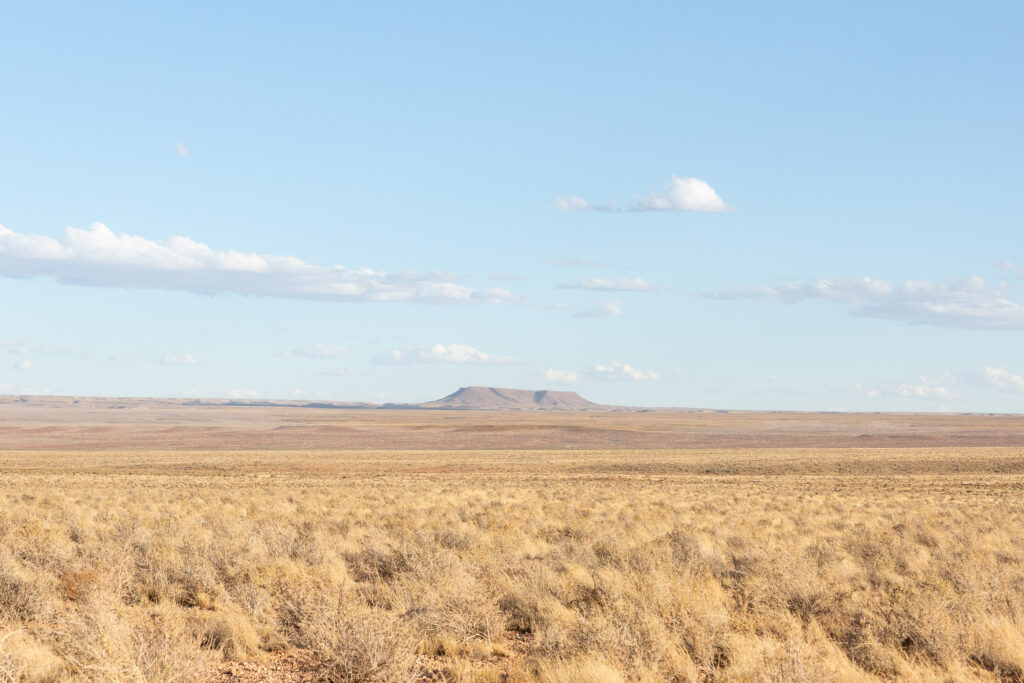
The image I entered in the festival is one I’ve wanted to make for several years now, of a very specific photo of a very specific place in northern Arizona – the Vermillion Cliffs – and last week I said “now is finally the time”.
When a good friend and I were talking during a recent visit to Ohio she mentioned the Japanese concept of ma, the space in between things that is just as important as the things themselves. Wikipedia describes ma as “an artistic interpretation of empty space…the concept of space as a positive entity as opposed to an absence…an emptiness full of possibilities, like a promise yet to be fulfilled”. I felt like that described part off my own emotional response to the West and what I like about it – how the mountains and canyons frame space, a really great “nothingness” that has an actual power.
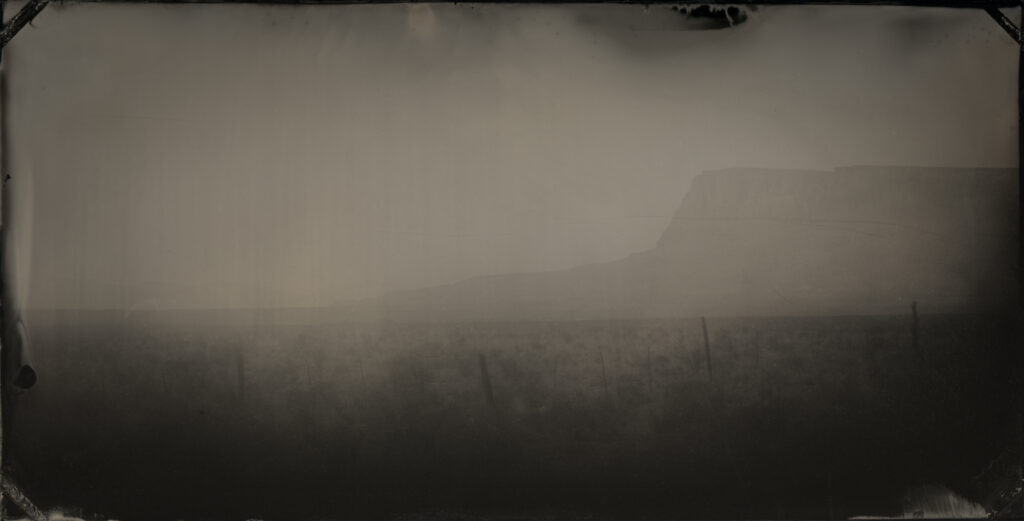
I love the form of the Vermillion Cliffs (as well as many other things about that area) and the vision in my head was very minimalist, just sky, ground, and the cliff face. I didn’t want to do my usual style, lots of sharp detail, more of a documentation of the reality; I wanted to create a photograph that looked the way I wanted it to look, to match the mood and feeling in my head.
閒
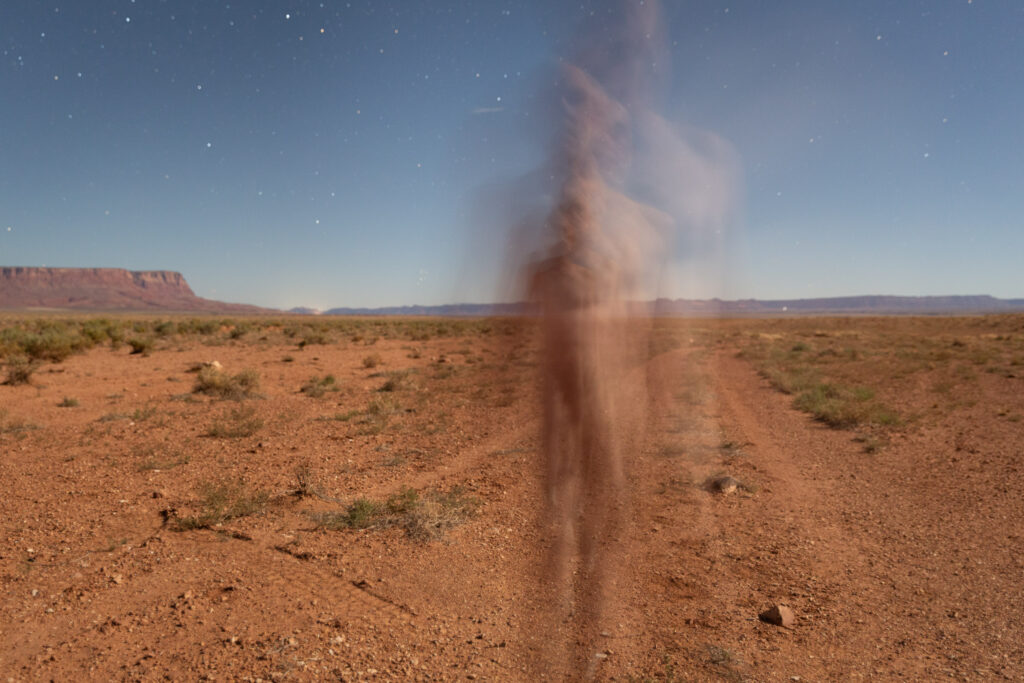
For the color photo I played around a bit more. I didn’t want to take it as seriously – for me, I mean, not that I wasn’t taking the festival seriously – which gave me permission (to myself) to experiment. In addition to ma, I also often think about the Navajo and their skinwalkers when I’m out in their territory (as I was for this project). I’m still not sure how that idea of shapeshifting evil spirits fits into my making of this photo – it’s still something rattling around in my head – but it’s part of the mix of feelings that went into making this photograph.
When I got home and was selecting images and thinking about titles (something else I don’t typically do) I did some reading about ma and its history. According to Wikipedia, the current Japanese symbol for it is a combination of the symbols for “door” and “sun”, and represents the space in a doorway through which the sun’s light can shine through, which is pretty great for a photographer. But – and I just read this yesterday, after making the photos – the older version of the concept was xián, in which the “door” was still there, but the sun symbol was instead the “moon” symbol – so it meant the space through which the moonlight could come through.
The only light sources in my photograph are a few car headlights, some star light, and then the moonlight hitting the ground, the cliffs, and me.
(The festival rules stipulate no “explicit, obscene, or nude” photos, but I figure this isn’t very explicit or obscene, and I am wearing shoes and socks, so I’m not technically nude!)
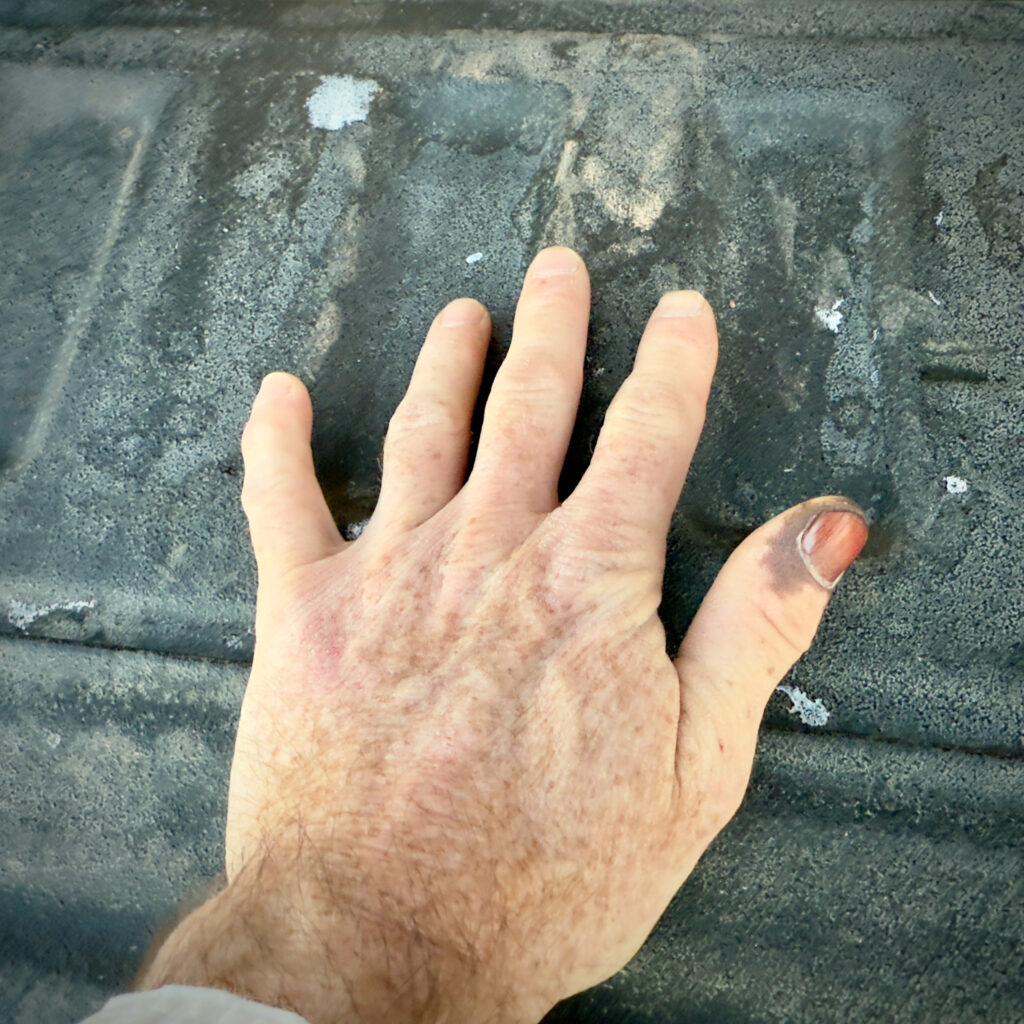
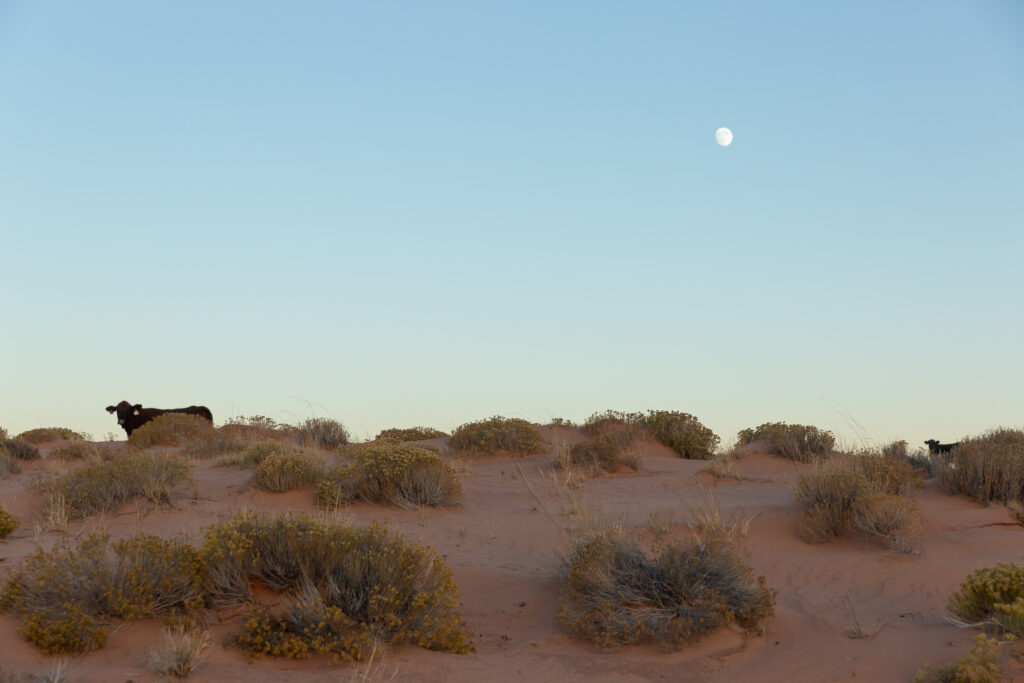
As often happens with photography, the stuff that happens around the edges is pretty great, too. Like I said, I had scouted out locations a few days before the competition, and for one photograph I had picked a very specific spot along the edge of Marble Canyon. When I arrived for the actual competition – well after sunset – there were people in “my” spot. How dare they?!
I stopped and got out and tried to look non-threatening / crazy. “Uh, excuse me, so sorry to bother you: are y’all camping here tonight?”
“Nope. We’re just here for the sunset and happy hour. Can I make you a cocktail? Bourbon or rye?”
Before I knew it I had a proper Old Fashioned in my hands, in a cocktail glass (ok, plastic, but still bougie), complete with a Luxardo cherry, slice of orange, and a swizzle stick. I don’t make them that thoroughly for myself at home, and here I am in the dark on the edge of a canyon with a nice drink meeting a whole group of new friends.
They were curious about what I was doing with my photography, and they told me about the family trip they were all on. It turns out that the patriarch (?) of the group, Dave Elston, is also, among other things (tonight: outstanding bartender), an author who wrote a book about his experiences spending a very long time in the Grand Canyon.
“Hmm… Mark, hold on a sec…” and before I knew it he had gone to his truck and brought back a signed copy to give to me.
The next morning two women jogged by the truck just as I, wearing an apron and standing by a weird box with holes in it (my darkbox), was pulling on a pair of rubber gloves. “Uh…we need to know what’s going on here!” they laughed. “We figured you were either a photographer or a serial killer.”
A little bit later a truck towing a camper slowed to a crawl and waited for me to wave them through – it was a very considerate couple who recognized what I was doing (rare!) and didn’t want to kick up too much dust! They also came over and, after asking if I was a serial killer (I must have been giving off strong vibes that morning) had a great chat about photography and family and history. Making good photos is fun, of course, but meeting strangers and having great interactions with new friends is often what really makes this work rewarding.
There’s more to the story of how I made the tintype and the color photos technically, but what was interesting for me personally is how I approached making the photo artistically. It was a bright clear sunny day at the Vermillion Cliffs, but I wanted that certain look, a mood, and for the first time in this body of work I made the photo look the way I saw it in my head, instead of just recording what was in front of me. I put more creative vision into this one that I normally would do, and that was a different way of working for me. It was good for me to break out of my usual habit.
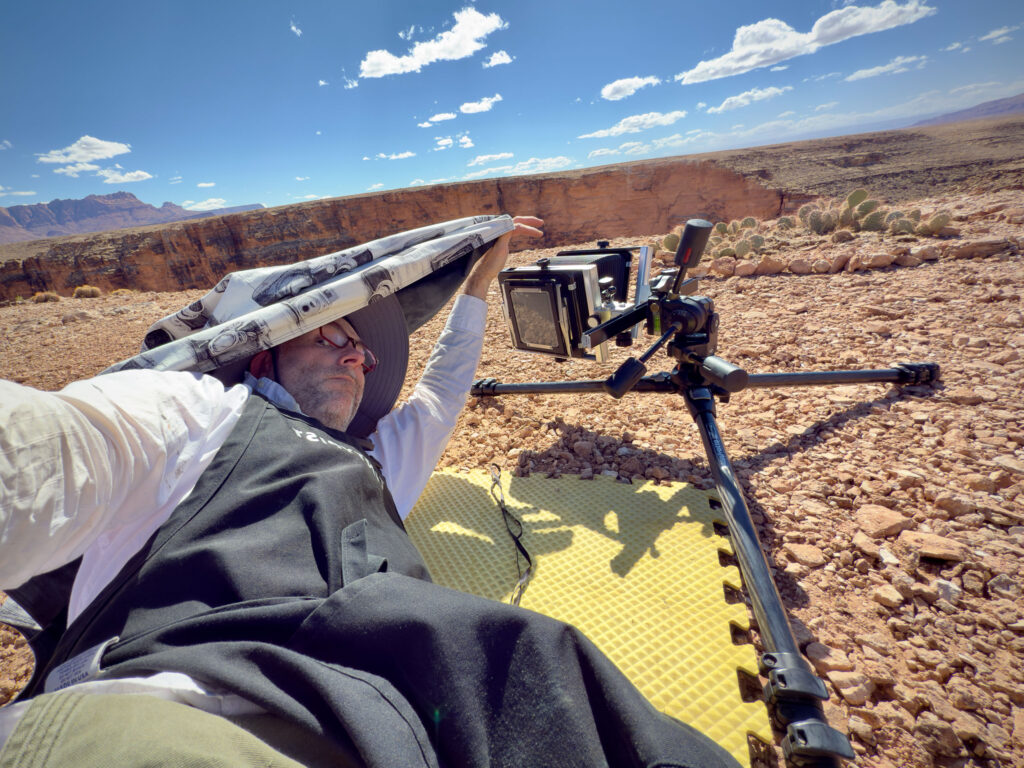
After three long days of travel and field work, after I got the photos I wanted, I couldn’t resist finishing the project with a selfie.
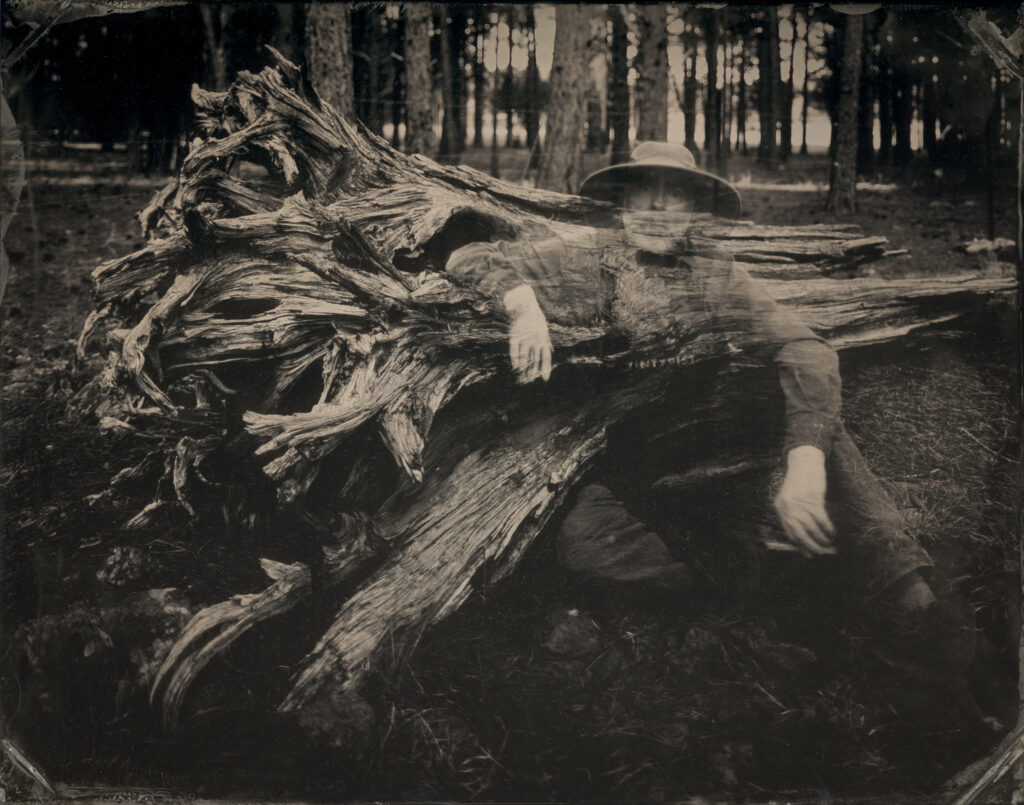
Special thanks to several people: My friend Jonathan Adams for talking me through an edit and Tom at Tom Alexander Photography for fitting me in (i.e. saving my ass) with some last-minute photo printing and excellent service all around.
As with many things, I couldn’t have done this without the help of my friend Shane Knight. Not only did I end up needing to use one of his camera lenses to get the composition I wanted, but he also provided the key suggestion that made my vision of the Cliffs actually work. He and his employee David also opened up their Mountaintop Frame Shop to let all of us crazy people in for an incredibly fun day of pizza, beer, and framing our own work. David was way more chill with a bunch of people working in his shop with his tools than I probably could have mustered, and did a great job of instructing and coaching on top of his own workload.
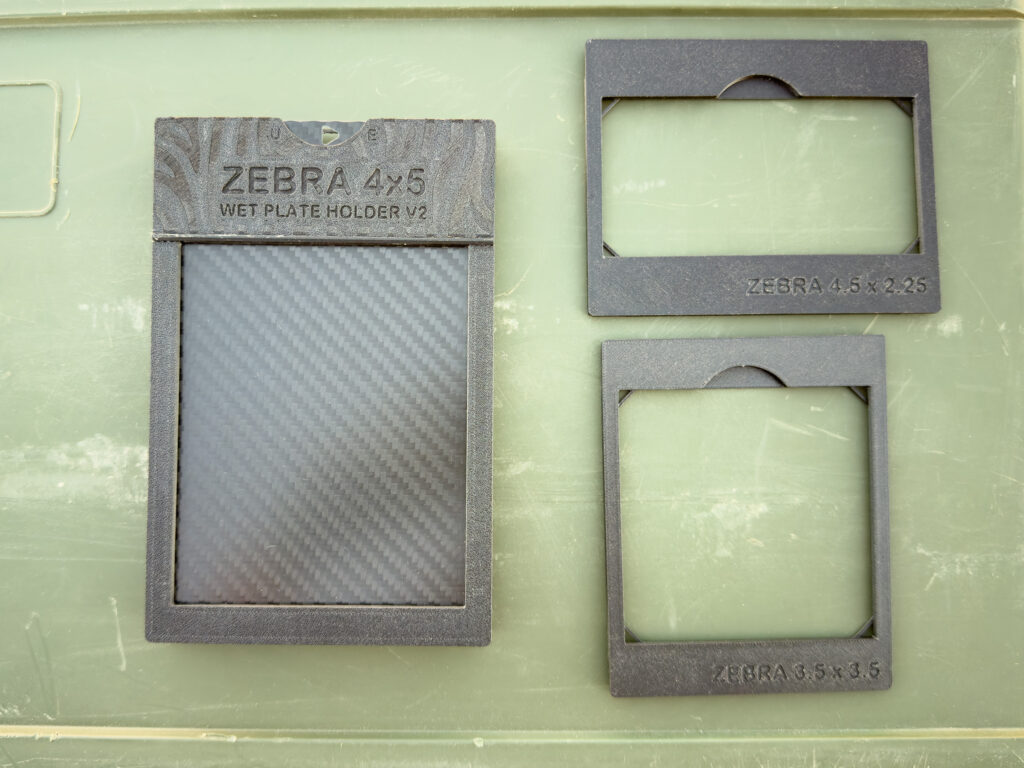
I also used a new piece of equipment for my panoramic tintype. I recently found out about Zebra Dryplates, which, despite having “dry plates” in the name, is a maker of many photography-related products. So far most of my tintypes have been limited to one aspect ratio (approximately 4×5) and I have long wanted to create photographs in other formats (and I don’t crop my tintypes). Nejc, the guy behind Zebra Dryplates, offers custom sizes for plate holders, so I ordered an insert to allow for a 2:1 aspect ratio panorama, which I used for the Vermillion Cliffs photo. (I also got a square insert, but haven’t had a chance to use it much, yet.)
So far I’ve only made a few plates with these new holders, but I’m hooked. They are very well designed and seem to be solidly made. Communication with Nejc was great, and they handled all the tariff bs going on when it came to shipping. I’m looking forward to making more photographs with them, and ordering more holders in different sizes.
Opening reception and awards ceremony
If you’re in the Flagstaff area there is a free opening reception today, Saturday, October 11th, 2025, from 1-3pm at Flagstaff Camera.
If you can’t make it Saturday, but would like to see local photographers’ visions of this area, the show will remain up until October 19th.
Update re: opening reception and awards
The exhibition’s opening reception was wonderful. The Flagstaff Camera space is beautiful, there was a good turnout of existing friends, and I made several new ones. Great conversations!
My photograph Walking in my own skin won third place in the color category. There was some stiff competition, and if I were a judge I’m not sure I would have included my photo, so that was nice to see.
My Vermillion Cliffs tintype didn’t place; the black and white category <in western movie cowboy voice> “warn’t big enough” with Shane Knight and Heather Stockton (husband and wife) in the running. Shane took first and second places, and Heather took third. Congratulations to them both! It was good to see their photographs be recognized like that, especially since all three were film photographs, hand-printed silver gelatin prints, which I knew both of the artists put a lot of effort into. But more importantly, for me anyhow, they were not the typical landscape images one might expect – Shane’s are both urban scenes, and Heather’s is a somewhat abstract detail of an old fallen tree’s roots. (I liked it enough to make it the first sale of the show!)
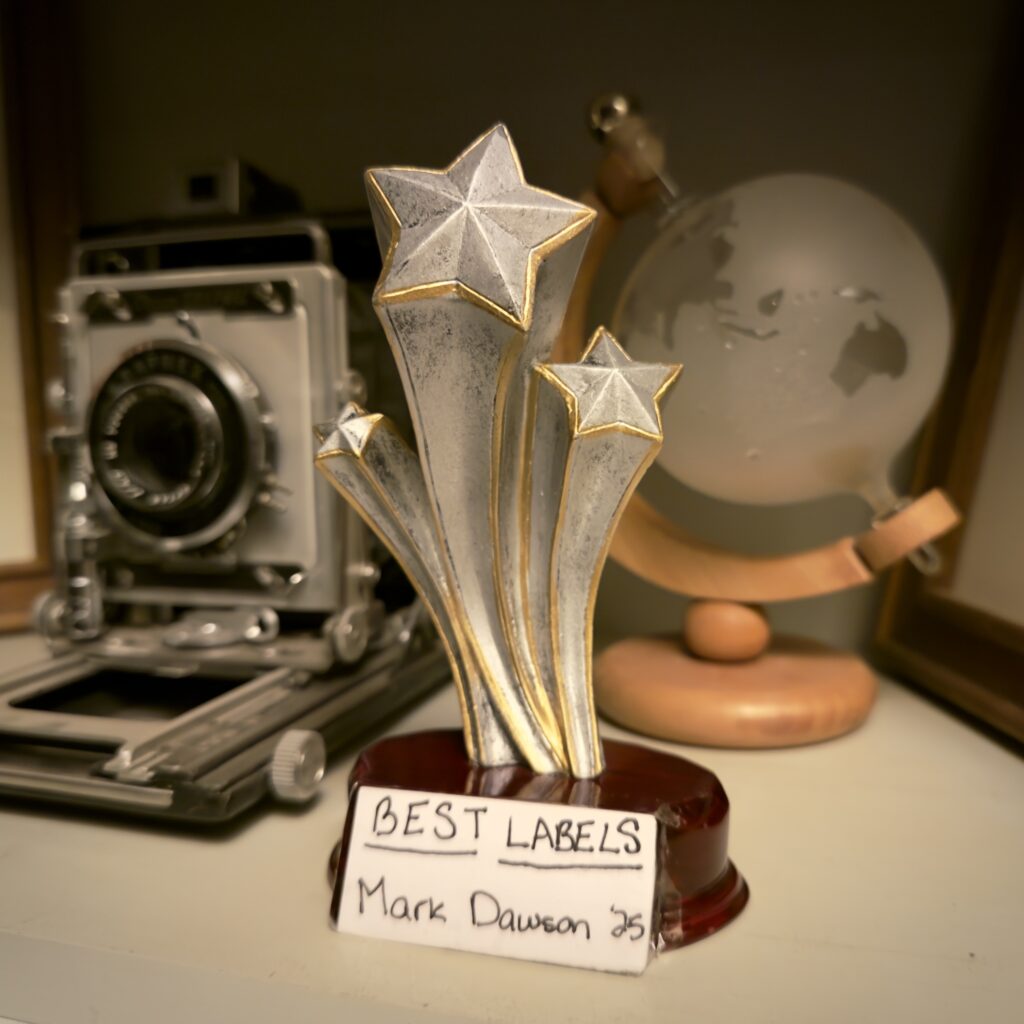
Perhaps my greatest honor happened before the reception really even got going. I was awarded “Best Labels”, complete with a truly epic trophy. My friend – and fellow exhibition photographer – Katie Kroeppler Wright and I had gotten into a heated discussion regarding labels for the wall. Aside from the lack of clarity as to whether we were to supply them or not, I expressed the firm opinion that they should be simple and uniform for the exhibition. She disagreed. It was war.
So I went home the evening before the show and did some digging around in a box of scrap old prints and found a cyanotype from years ago that wasn’t a great print. I cut it into the required 2×4 inch pieces and wrote my label info on them. Very different from my usual boring literal straightforward style. Good to see that pushing my own boundaries was recognized and rewarded. :-) This just made my whole day, thanks Katie!